Comparing Manual Research and AI-Assisted Analysis for Market Opportunities
Every business that wants to grow needs to understand where demand exists, what competitors are doing, and which customer segments are underserved. The process of gathering that information and turning it into actionable strategy is what a market intelligence engine does. But how you go about that work matters. Some teams rely on manual research, others turn to automated tools, and many try a mix of both. The choice between manual research and AI-assisted market opportunity analysis is not about which is better in absolute terms. It is about which approach suits your situation, resources, and goals.
What Manual Research Looks Like
Manual research means a person reads reports, checks competitor websites, scans social media, talks to customers, and compiles data by hand. It is time-intensive but gives the researcher a deep feel for the market. You notice small details that a machine might skip. You read between the lines of a competitor's press release. You hear the tone of a customer complaint on a forum. That kind of qualitative insight is hard to automate.
For a small business with a narrow local focus, manual research can be enough. You might visit competitor stores, take notes on pricing, and ask a few customers what they wish was different. That direct observation often reveals market gaps that no database would flag. The downside is scale. Doing the same work across multiple cities or product lines quickly becomes overwhelming. Manual research also suffers from human bias. You might overlook signals that contradict your assumptions, or you might miss a weak signal because it appears in a source you do not normally check.
The Role of AI-Assisted Analysis
AI-assisted analysis uses software to scan large amounts of data, identify patterns, and score opportunities. A market intelligence engine can pull in search trends, social conversations, review data, competitor ad copy, and local business listings. It processes that information faster than any person could, and it can surface connections that are not obvious. For example, it might show that interest for a certain product spikes in a specific region at the same time that competitor presence drops there. That is a market gap worth investigating.
Automated analysis also reduces bias. It looks at the same rules for every signal, so it does not favour one type of evidence over another. It can track changes over time and alert you when a shift happens. That is useful for businesses that operate in fast-moving sectors or across multiple locations. You cannot have a person checking every competitor's website every day, but a machine can do that and more.

Still, AI-assisted analysis has limits. It works with data that exists. If a new competitor opens a shop but has no online presence yet, the tool might not pick it up. It also struggles with context. A machine can tell you that a keyword is trending, but it may not grasp why or whether the trend matters for your specific business. That is where human judgment comes back in.
When Manual Research Works Best
Manual research is a strong choice when you are entering a very small or niche market. If you are the first mover in a local area, there may be too little data for automated tools to generate useful signals. You need to talk to people, observe behaviour, and build understanding from the ground up. Manual research also works well when you need to verify a lead that an automated tool gave you. The machine says there is demand for a service in a certain zip code. You drive there, look at the local shops, and talk to a few residents. That field check can confirm or refute the tool's suggestion.
Another scenario where manual research shines is when you are exploring a completely new idea. You are not sure what the customer segments look like, and you cannot give a machine clear parameters to search. In that case, open-ended exploration through interviews and observation can reveal opportunities that no algorithm would predict.
When AI-Assisted Analysis Adds Value
AI-assisted analysis is most valuable when you operate at scale. If you have multiple locations, dozens of product categories, or a broad customer base, manual research becomes impractical. You need a market intelligence engine to process the volume and keep you updated. It can also help you prioritise. Opportunity scoring, a common feature of these tools, ranks potential markets by factors like demand, competition level, and customer intent. That lets you focus your limited time on the most promising leads.
Automated analysis also helps with local search data. If you are a multi-location business, you need to know what people are searching for near each store, what competitors are doing in that neighbourhood, and where the gaps are. Doing that manually for ten locations is tedious. For a hundred locations it is impossible. A tool that pulls local search trends and competitor activity can give you a map of where to invest next.
For businesses that need to react quickly, AI-assisted analysis provides speed. A competitor changes its pricing or launches a campaign. An automated tool can flag that change the same day, while manual research might take a week to notice. In fast-moving markets, that speed can be the difference between capturing demand and missing it.
Combining Both Approaches
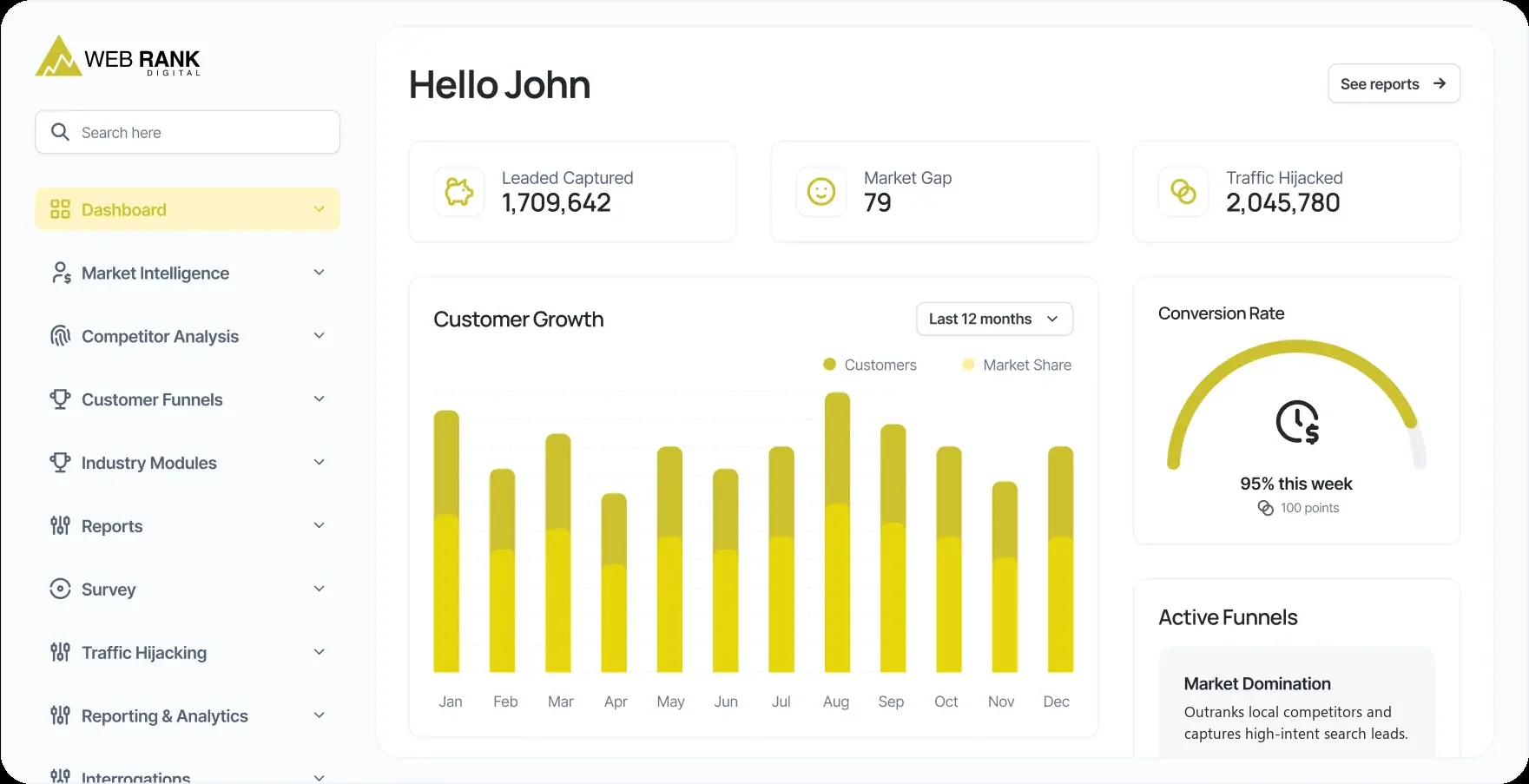
The most effective strategy for most businesses is a hybrid one. Use a market intelligence engine to scan the landscape, identify patterns, and generate leads. Then use manual research to investigate the most promising ones. The tool gives you direction; your own eyes and ears give you depth. For example, the engine might show that searches for "emergency plumbing" are rising in a certain suburb and that only two competitors rank well there. You then call a few property managers in that area to confirm the demand and learn what customers complain about most. That combination is powerful.
Another benefit of combining both is validation. Automated data can be noisy. A spike in search volume might come from a news story, not real demand. Manual checks can separate signal from noise. Conversely, a human might dismiss a trend as irrelevant, but the data shows it persists across multiple sources. That data can persuade you to reconsider your assumptions.
What to Watch Out For
Whichever approach you choose, there are pitfalls. Manual research can become a time sink if you do not set clear boundaries. You can end up collecting information but never acting on it. Set a time limit for each research phase and a clear decision point. AI-assisted analysis can become a black box. You feed it data and get scores, but you do not always understand how it reached its conclusion. That is fine if you trust the tool, but it can lead to mistakes if the underlying data is flawed. Always ask what sources the tool uses and how often it updates them.
Another common issue is over-reliance on one method. A team that uses only manual research may miss shifts that happen fast. A team that uses only automated analysis may chase phantom opportunities that look good in a dashboard but do not exist in reality. The hybrid approach protects against both extremes.
Finally, remember that analysis is not action. Identifying a market gap is only the first step. You still need to build a product, reach customers, and deliver value. The best market intelligence engine in the world will not do that for you. It can, however, make sure you spend your energy on the opportunities most likely to pay off.
Choosing the Right Fit for Your Business
If you are a solo entrepreneur testing a local service idea, start with manual research. Spend a few weeks talking to potential customers and observing competitors. You do not need a sophisticated tool yet. If you are a growing business with multiple locations or product lines, consider a market intelligence engine to keep you informed. Tools like those offered by webrankdigital.com are designed to automate the heavy lifting of competitor analysis and opportunity detection, so you can focus on execution.

For established companies with dedicated research teams, the choice is not either/or. Build a process that combines both. Let the engine scan broadly, and let your team dive deep on the most promising signals. That balance tends to produce the most reliable market opportunity analysis. It also keeps your team grounded in real-world context, which no algorithm can fully replicate.
Ultimately, the goal is not to choose a method and stick with it forever. Markets change, and so should your approach. Start with what fits your current scale and budget, and evolve as you grow. The businesses that succeed are not the ones with the most data or the fastest tools. They are the ones that understand their market well enough to act with confidence. A thoughtful combination of manual research and AI-assisted analysis, supported by a reliable market intelligence engine like the one at webrankdigital.com, gives you that understanding.